Ghost Warrior Society: Independent Analysis of Claims and Practices
What is the Ghost Warrior Society?
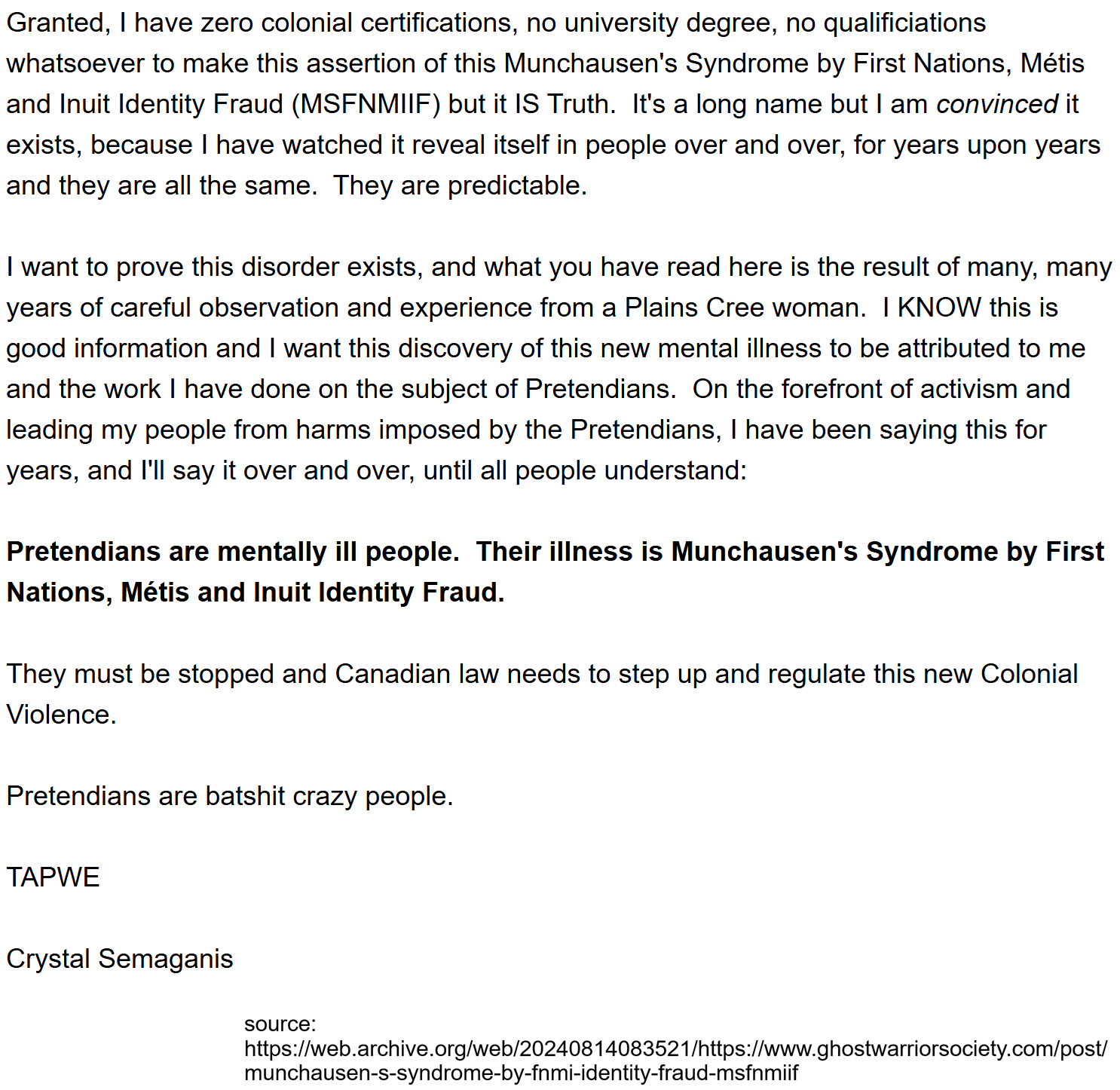
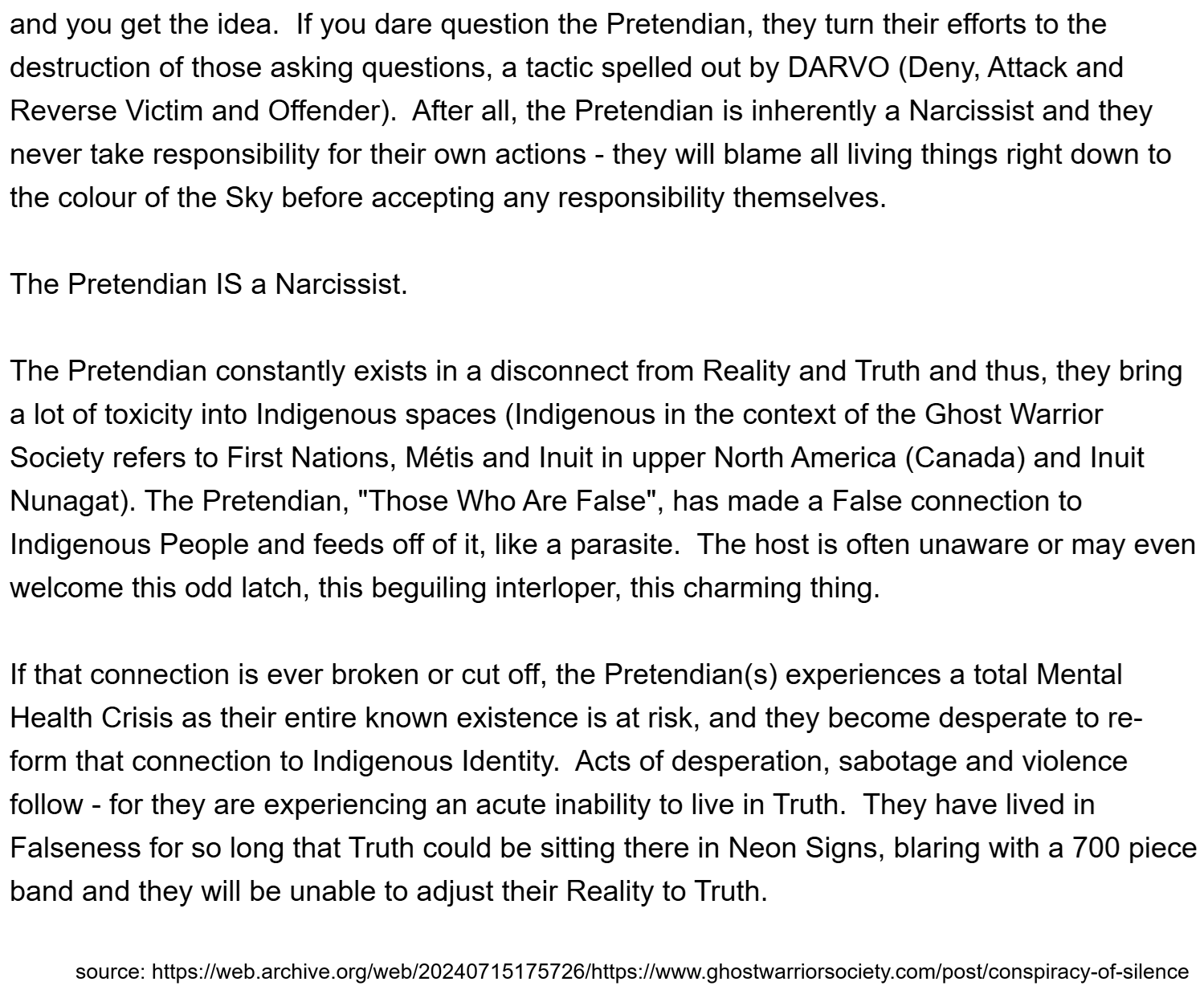
The Ghost Warrior Society, led by Michelle Christine Cameron (also known as Crystal Semaganis), presents itself as an organization focused on identifying alleged cases of Indigenous ancestry fraud. Publicly available information about the group’s internal structure, membership, governance, and financial oversight is limited.
The organization describes its work as genealogical research; however, its public materials do not address structural limits on access to records, including legally sealed adoption and child welfare files.
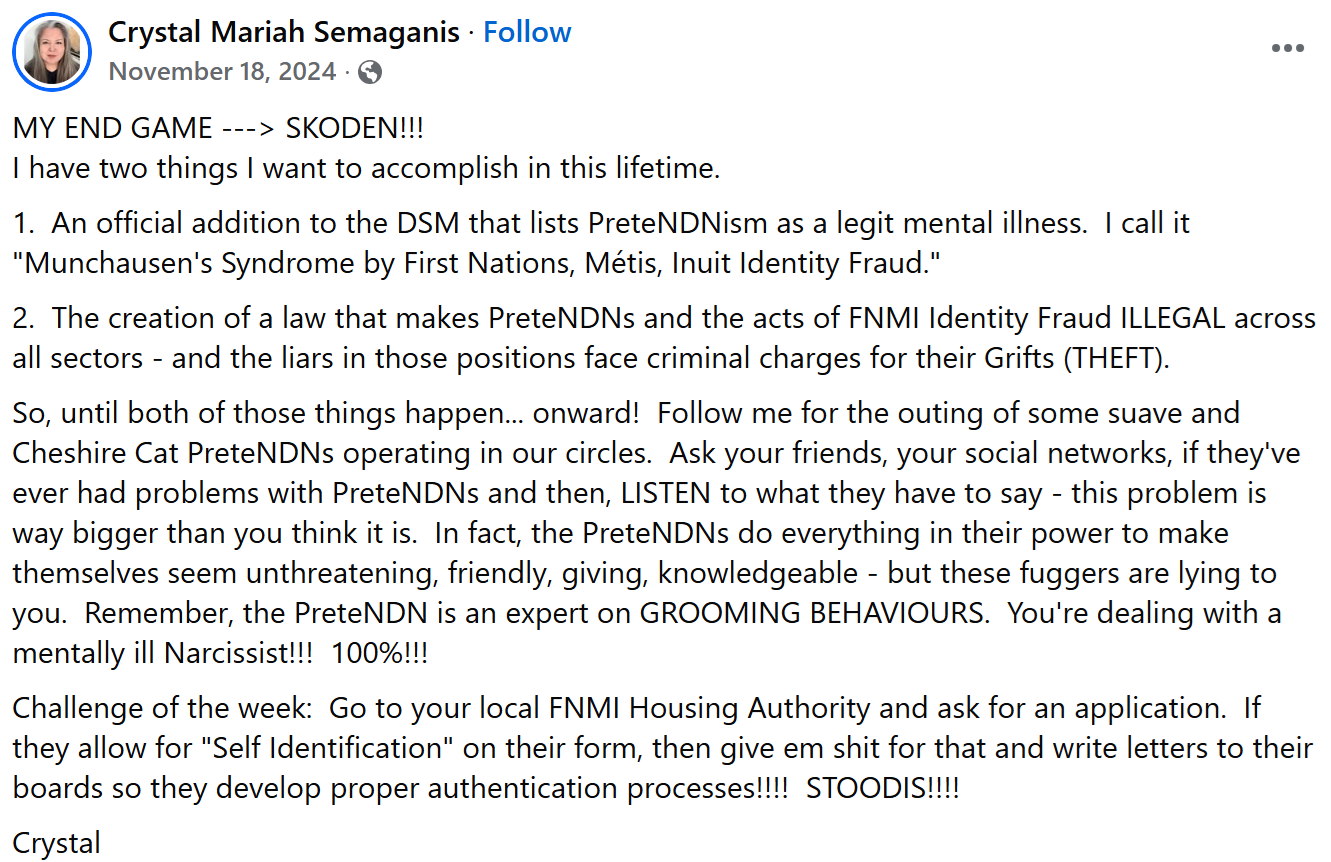
Cameron has published genealogical claims on her website and social media that involve living individuals, including names, photographs, and other identifying details, alongside allegations of fraud. Such disclosures place individuals under public scrutiny outside of a formal, transparent, or independently accountable investigative process.
Key Context Often Missing When Allegations Are Reported or Repeated
In Canada, closed adoption records and certain child welfare files are generally not accessible to members of the general public. Without the informed consent of the individual concerned, it is often legally impossible to obtain complete documentation of ancestry in cases involving adoption, foster care, or sealed records.
As a result, claims that rely on the absence of documentation may reflect legal and structural barriers rather than evidence of misrepresentation. This limitation is material to evaluating public allegations and is frequently unacknowledged in coverage of identity-related disputes.
Ethical and Community Concerns
Genealogical Ethics and Privacy
Professional genealogical standards emphasize confidentiality, informed consent, and sensitivity when publishing genealogical information.
"I will not publish any personal, genealogical, or genetic information disclosed to me unless I have informed consent or omit personally identifying detail. I will also treat publicly available information about living people with sensitivity and will not publish any information with foreseeable potential for harm."
—Board for Certification of Genealogists Ethics and Standards
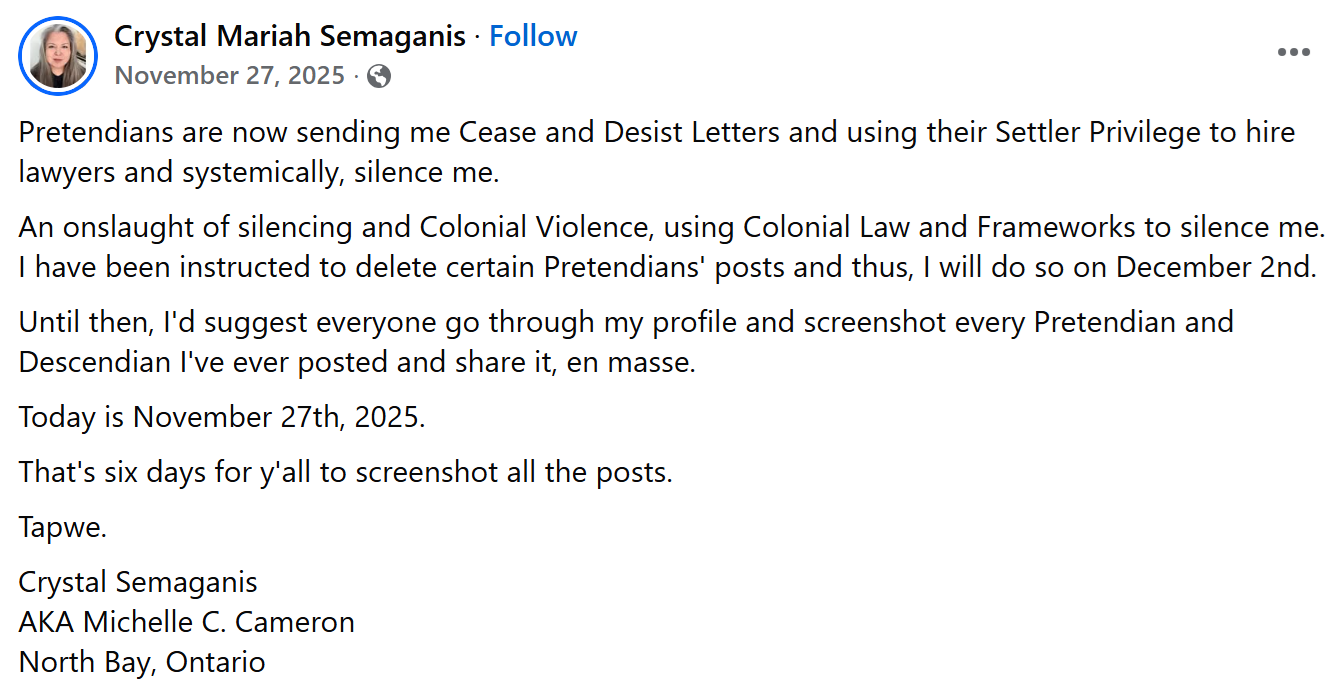
Online posts attributed to Cameron include identifying details about living individuals in connection with allegations of fraudulent identity. In the example post below, followers are encouraged to screenshot and redistribute this content. These practices appear inconsistent with established genealogical ethical standards, particularly those concerning consent, proportionality, and foreseeable harm. To avoid amplifying identifying information or causing additional harm, this page does not reproduce screenshots that name or depict private individuals targeted in these allegations.
Harm to Indigenous Communities
Family histories within Indigenous communities are often shaped by colonization, forced displacement, adoption, and systemic marginalization. Questions of ancestry and identity are therefore deeply personal. Allegations about identity can have serious emotional and social consequences.
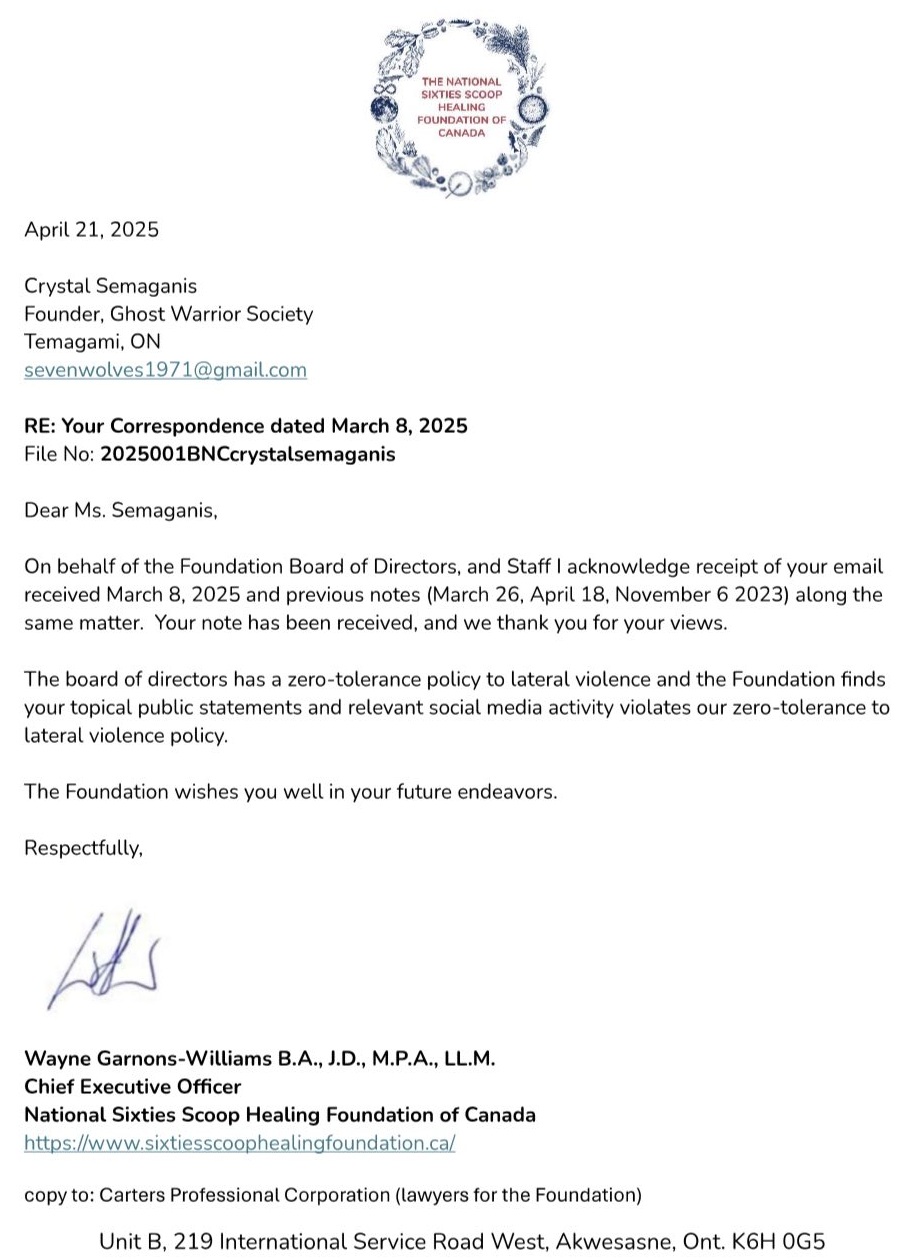
In April 2025, the National Sixties Scoop Healing Foundation stated that Cameron’s public statements and social media activity violated its zero-tolerance policy on lateral violence.
Public Commentary and Critique
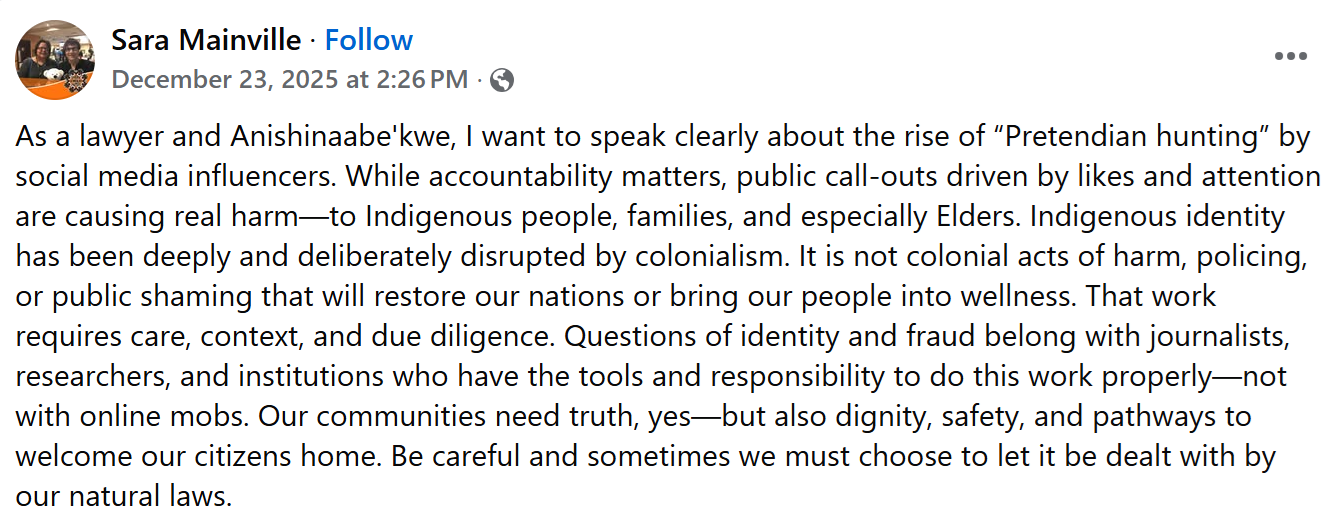
- "Modern Pretendian hunting tends to focus on defining people out of Indigeneity through rigid insistence on documents and proofs. That effort can backfire when allegations are wrong, shattering reputations and dividing communities." —ashenigewin, December 2025
- "While it’s important to address individuals deliberately faking Indigenous identity for monetary gain, avoiding inflicting harm on our communities in that process needs to be a top priority." —Pow Wows, Inc., June 2024
- "...saying, “Who claims you?” often leaves out urban Indigenous and/or disconnected peoples." —Indigenous Ecology Lab, December 2023
- "We have to have a way of talking about it rationally, because it’s so confined to social media right now, and this call-out culture — that’s where we’re at, and it’s really toxic..." —High Country News, December 2025
- "I’m not sure how productive this is. Granted, there are few things more important to a people than their identity and history, but frequently there seems to be a nasty tone to some of the rhetoric." —TVO Today, July 2023
Reasoning and Accountability Concerns
Burden of Proof
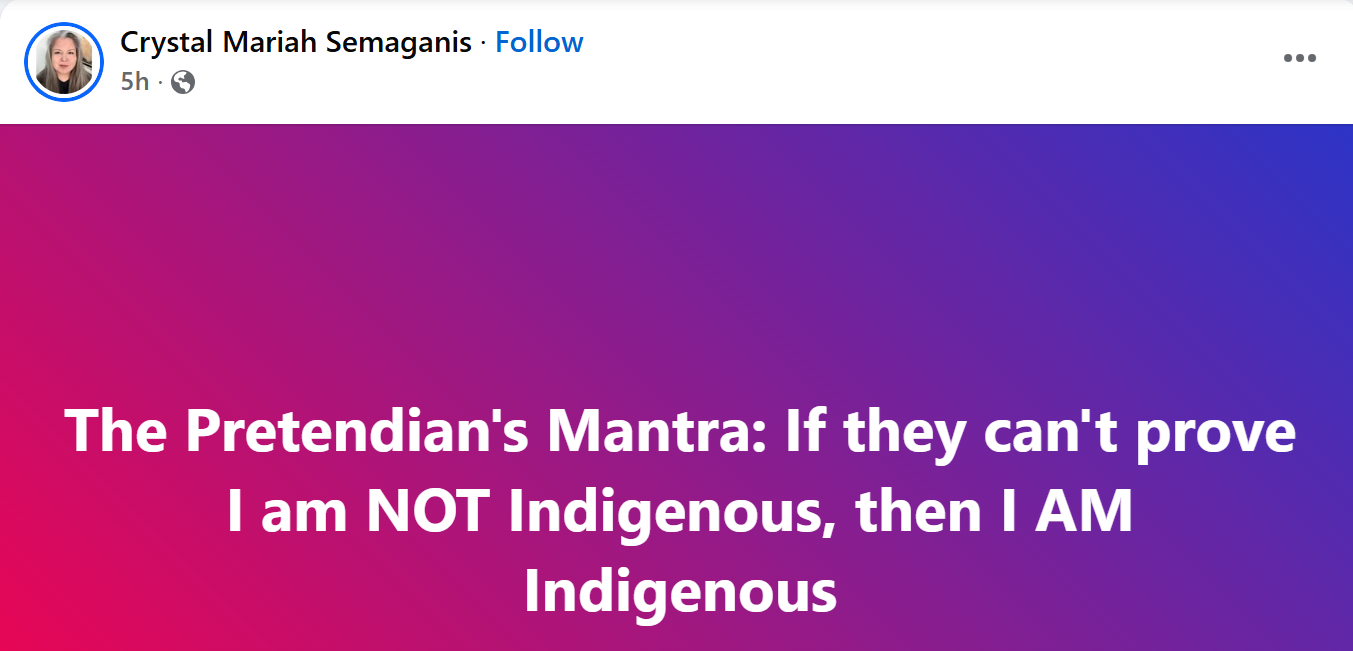
In some online discussions, claims are framed in ways that shift the responsibility to disprove an allegation onto those being accused. In established standards of reasoning, the burden of proof rests with the person making a claim, not with those questioning it. The inability to disprove an allegation does not constitute evidence that it is true.
Circular Reasoning and Self-Exempting Standards
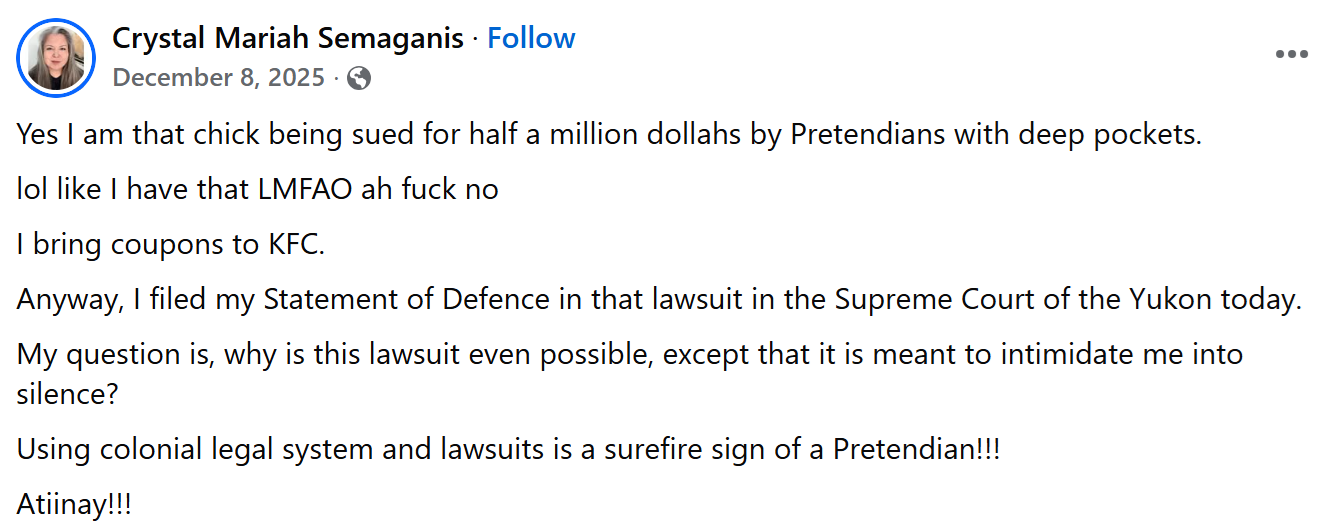
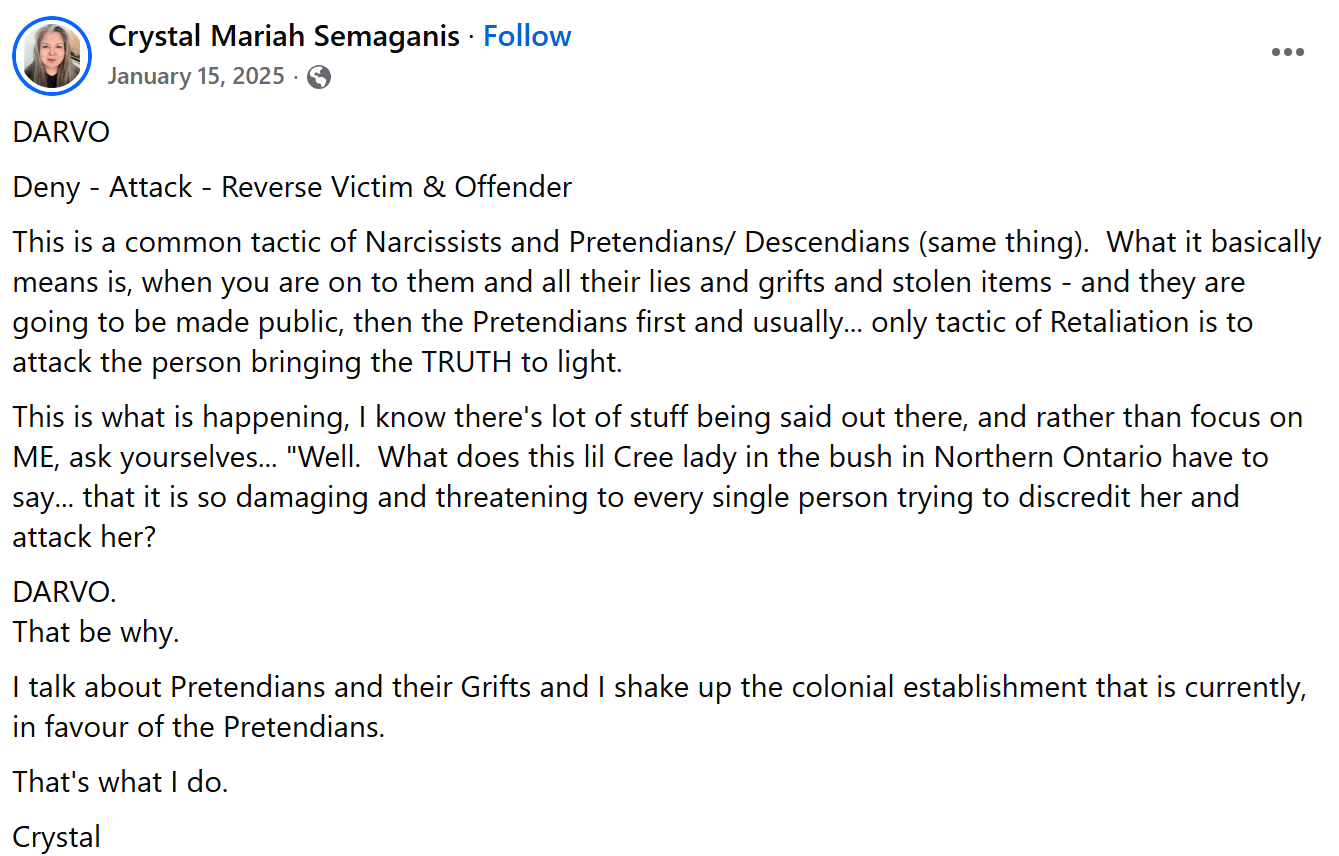
Some statements reflect circular reasoning, in which criticism or legal challenge is treated as evidence of guilt rather than addressed on its merits. In these cases, accountability mechanisms appear to be accepted when applied to others but dismissed when directed toward the speaker, creating a self-exempting standard in which disagreement itself is interpreted as confirmation of wrongdoing and limiting opportunities for good-faith critique or independent verification.
Engagement with Criticism
Constructive critique is a key part of ethical research and public accountability. In multiple instances, Cameron's responses to criticism have focused on questioning the motives or character of critics rather than engaging with the substance of their concerns. This can discourage dialogue, limit opportunities for correction or clarification, and frame disagreement as hostility rather than a routine part of ethical scrutiny.
Legal Context
According to CBC News (29 Aug 2025), Cameron is being sued by four women over allegations that they were falsely accused of pretending to be Indigenous. The plaintiffs are seeking damages and retractions related to public statements made about them.
As of the date of this publication, these matters remain before the courts, and no legal conclusions are asserted here. Allegations raised in court filings represent the claims of the plaintiffs and have not yet been adjudicated.
Conclusion
Fraudulent claims of Indigenous ancestry can cause real harm to Indigenous communities and erode trust in programs intended to address historical and ongoing inequities. This analysis does not dispute that fraudulent claims of Indigenous ancestry exist or that they can cause harm; it focuses on the methods, ethics, and impacts of public accusation campaigns. Addressing this issue requires careful, ethical, and community-led approaches grounded in transparency, due process, and respect for privacy.
Public accusation campaigns conducted without clear standards, accountability, or safeguards risk causing significant harm while bypassing appropriate mechanisms for resolution. Meaningful accountability depends on evidence, ethical practice, and respect for the people and communities affected.
Purpose and Scope
This page provides a good-faith, public-interest review of publicly available statements, materials, and reported events related to the Ghost Warrior Society. It is offered for general informational purposes only.
The content addresses publicly observable conduct, stated practices, and ethical or community considerations as they are presented in public forums. It does not assess the accuracy of genealogical claims, make findings of fact, draw legal conclusions, or allege wrongdoing by any individual or organization.
Any discussion of patterns, concerns, or impacts is descriptive rather than determinative and should not be read as a conclusion about intent, character, credibility, or legality.
This page is not intended to encourage harassment, retaliation, or public shaming, and it discourages any such use. Readers are encouraged to review primary sources and reach their own independent conclusions.